The era of flawless wireless mechanical gaming keyboards has arrived, offering performance identical to wired counterparts thanks to advanced 2.4GHz wireless technology. Modern gaming-grade wireless keyboards utilize a dedicated USB dongle to achieve a 1ms response time and 1000Hz polling rates, making them imperceptible from wired keyboards for over 99% of gamers, including aspiring professionals. This allows gamers to enjoy a cleaner, more flexible desk setup without compromising on speed or precision.

This guide provides a deep dive into everything you need to know, from understanding the underlying technology to identifying essential components, empowering you to choose the perfect keyboard to improve your setup and gameplay.
Why Choose a Wireless Mechanical Gaming Keyboard?
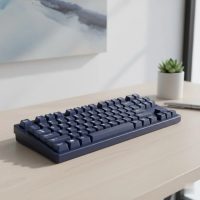
The primary appeal of going wireless is a cleaner, more flexible desk setup. Without a cable to snag or limit positioning, you gain unparalleled freedom, allowing for more ergonomic placement and freeing up significant space for wide, sweeping mouse movements, which is a critical advantage in FPS games.
Historically, latency was a major concern for serious gamers, especially with early Bluetooth technology. However, modern gaming-grade wireless keyboards have definitively solved this problem.
The Myth of Wireless Latency: Busted
Modern wireless gaming keyboards primarily use a dedicated 2.4GHz USB dongle for signal transmission. This technology creates a direct, high-speed channel between your keyboard and PC, offering polling rates of 1000Hz or even higher. Practically, this translates to a 1ms response time, identical to high-performance wired gaming keyboards. For over 99% of gamers, including aspiring professionals, the difference between a top-tier 2.4GHz wireless keyboard and its wired counterpart is imperceptible.
As Alex Chen, a competitive esports hardware consultant, often states, “Don’t fear wireless. Modern 2.4GHz technology is virtually indistinguishable from wired in terms of latency. The freedom and clean aesthetic it provides are pure advantages.”
Understanding Wireless Connectivity: 2.4GHz vs. Bluetooth
Most wireless keyboards offer two connection modes. Understanding their differences is crucial for an optimal gaming experience.
2.4GHz Dongle: The Choice for Gamers
This connection type should always be used for gaming. The included USB dongle provides a stable, low-latency connection designed for high-performance use. It’s a plug-and-play solution that ensures keystrokes are registered instantly and without interference, acting as a dedicated, invisible wire.
Bluetooth: Versatility for Everyday Use
Bluetooth is an excellent secondary option for convenience, allowing you to connect your keyboard to multiple devices like a laptop, tablet, or phone without needing the USB dongle. However, its latency is generally higher, and the connection can be less stable, making it unsuitable for serious or competitive gaming. Use it for typing on the go, but switch back to 2.4GHz for gaming sessions.
Key Features to Look for in Your Next Keyboard
Beyond wireless technology, the core components of a mechanical keyboard define its feel and performance. Here’s what to focus on.
The Heart of the Keyboard: Mechanical Switches
|
Our Picks for the Best Mechanical Keyboard in 2026
As an Amazon Associate I earn from qualifying purchases.
|
||
| Num | Product | Action |
|---|---|---|
| 1 | AK96 Smart Mechanical Keyboard Gaming, 96 Keys Full Size with LED Colorful Backlit, Clicky Creamy Sounding, USB Wired Computer Keyboard with Volume Knob for PC, Mac, Windows(Grey) |

|
| 2 | SteelSeries USB Apex 5 Hybrid Mechanical Gaming Keyboard – Per-Key RGB Illumination – Aircraft Grade Aluminum Alloy Frame – OLED Smart Display (Hybrid Blue Switch) |
|
| 3 | AULA F75 Pro Wireless Mechanical Keyboard,75% Hot Swappable Custom Keyboard with Knob,RGB Backlit,Pre-lubed Reaper Switches,Side Printed PBT Keycaps,2.4GHz/USB-C/BT5.0 Mechanical Gaming Keyboards |
|
| 4 | Logitech MX Mechanical Wireless Illuminated Performance Keyboard, Tactile Quiet Switches, Backlit Keys, Bluetooth, USB-C, macOS, Windows, Linux, iOS, Android, Metal, Graphite |
|
| 5 | AULA F99 Wireless Mechanical Keyboard,Tri-Mode BT5.0/2.4GHz/USB-C Hot Swappable Custom Keyboard,Pre-lubed Linear Switches,RGB Backlit Computer Gaming Keyboards for PC/Tablet/PS/Xbox |
|
| 6 | EPOMAKER x Aula F75 Gasket Mechanical Keyboard, 75% Wireless Hot Swappable Gaming Keyboard with Five-Layer Padding&Knob, Bluetooth/2.4GHz/USB-C, RGB (Light Blue, LEOBOG Reaper Switch) |
|
| 7 | Womier S-K80 75% Keyboard with Color Multimedia Display Mechanical Gaming Keyboard Creamy Sound, Wired Hot Swappable Gasket Mount RGB Custom Key board, Pre-lubed Stabilizer for Mac/Win, Black Kanagawa |
|
| 8 | Redragon Mechanical Gaming Keyboard Wired, 11 Programmable Backlit Modes, Hot-Swappable Red Switch, Anti-Ghosting, Double-Shot PBT Keycaps, Light Up Keyboard for PC Mac |
|
| 9 | RK ROYAL KLUDGE R98 Pro Wired Mechanical Keyboard, 96% Creamy Gaming Keyboard RGB Backlit with Number Pad and Volume Knob, Gasket Mount, MDA Profile PBT Keycaps, Hot Swappable Pre-lubed Linear Switch |
|
| 10 | RK ROYAL KLUDGE S98 Mechanical Keyboard w/Smart Display & Knob, Top Mount 96% Wireless Mechanical Keyboard BT/2.4G/USB-C, Hot Swappable, Software Support, Creamy Sounding, 98 Keys |
|
The switch is the mechanism beneath each keycap that registers a keystroke. The switch type dramatically affects the keyboard’s feel. There are three main types:
- Linear: These switches offer a smooth, consistent press from top to bottom with no tactile bump or audible click. Their speed and lack of resistance make them preferred by most gamers for rapid, repeated key presses. Popular examples include Cherry MX Red, Gateron Red, and Kailh Red.
- Tactile: These provide a noticeable “bump” in the middle of the keypress, indicating keystroke registration. They are excellent for typing and can also be great for gaming if you prefer a more deliberate feel. Examples include Cherry MX Brown and Gateron Brown.
- Clicky: In addition to a tactile bump, these switches produce a loud, crisp “click” sound. While satisfying for typing, they can be loud and are often less ideal for gaming where speed is paramount. Cherry MX Blue is the most well-known example.
For a dedicated wireless mechanical gaming keyboard, linear switches are almost always recommended for their raw speed.
Form Factor: Finding Your Perfect Size
Keyboards come in various sizes, known as form factors. The right one depends on your desk space and required keys.
- Full-Size (100%): The traditional layout with a dedicated number pad. Ideal for extensive data entry but occupies the most desk space.
- Tenkeyless (TKL or 80%): A full-size board with the number pad removed. This is a popular choice for gamers, providing more mouse room without sacrificing standard navigation keys.
- Compact (75%, 65%, 60%): These layouts further shrink the keyboard by removing more keys and compressing the layout. 65% layouts are a sweet spot for many, retaining dedicated arrow keys while being very compact. 60% boards remove arrow keys entirely, relying on function layers.
Battery Life: How Long Can You Game?
A wireless keyboard’s effectiveness depends on its battery. Pay close attention to battery life estimates when comparing models. RGB lighting significantly drains the battery faster.
- With RGB on: Expect 20 to 50 hours of use.
- With RGB off: Battery life can often extend to 200 hours or more.
Look for keyboards that can be used in wired mode while charging, ensuring a low battery never interrupts your game.
Hot-Swappability: The Ultimate Customization Feature
Hot-swappability is a significant advancement in the keyboard market. A hot-swappable PCB allows easy mechanical switch changes without soldering. This enables experimentation with different switch types to find the perfect feel or replacement of a faulty switch in seconds. For enthusiasts, this is a must-have feature providing ultimate control over the keyboard’s feel and longevity.
Frequently Asked Questions (FAQ)
Is a wireless mechanical keyboard good for competitive gaming?
Yes, absolutely. As long as you use a high-quality keyboard with a 2.4GHz connection, the performance is identical to a wired keyboard. Many professional esports players now use wireless peripherals in tournaments.
What is the best switch type for gaming?
Linear switches are generally considered the best for gaming because their smooth, uninterrupted travel allows for quick and repeated actuations. However, switch preference is highly personal, and some gamers may prefer the tactile feedback of a tactile switch.
How do I reduce input lag on my wireless keyboard?
To ensure the lowest possible latency, always use the 2.4GHz USB dongle, not Bluetooth. Plug the dongle directly into a USB port on your computer’s motherboard (at the back of your PC) rather than a hub. Finally, ensure the keyboard’s firmware is up to date.
Can I use a wireless mechanical keyboard while it’s charging?
Most modern wireless gaming keyboards are designed to function as standard wired keyboards when plugged in via their USB-C charging cable. This allows you to charge and play simultaneously without any interruption to your gaming session.
Are wireless keyboards as durable as wired ones?
Yes, wireless functionality does not impact physical build quality. A well-built wireless keyboard from a reputable brand will use the same durable materials, such as an aluminum frame and high-quality PBT keycaps, as its wired counterparts.
Conclusion: Cut the Cord Without Compromise
The debate is over. The modern wireless mechanical gaming keyboard offers the best of all worlds: the unmatched precision and tactile feel of mechanical switches combined with the clean, untethered freedom of a wireless connection. By prioritizing a stable 2.4GHz connection and understanding core components like switches and form factor, you can confidently build a gaming setup that is both aesthetically pleasing and competitively viable.
So go ahead, declutter your desk and embrace the future. Your perfect gaming experience is waiting, no strings attached.
Frequently Asked Questions
Are wireless mechanical keyboards suitable for competitive gaming?
Yes, high-quality wireless mechanical keyboards with a 2.4GHz connection offer performance identical to wired keyboards. Many professional esports players now use wireless peripherals in tournaments due to their reliable 1ms response times.
Which mechanical switch type is best for gaming performance?
Linear switches are generally considered optimal for gaming because their smooth, uninterrupted travel allows for quick and repeated actuations. Popular examples include Cherry MX Red and Gateron Red, which provide consistent key presses without tactile bumps or clicks.
How can I minimize input lag on my wireless gaming keyboard?
To minimize input lag, always use the 2.4GHz USB dongle, not Bluetooth, and plug it directly into a USB port on your computer's motherboard. Additionally, ensure your keyboard's firmware is regularly updated to maintain optimal performance and responsiveness.
Can I use a wireless mechanical keyboard while it is charging?
Most modern wireless gaming keyboards are designed to function as standard wired keyboards when connected via their USB-C charging cable. This feature allows you to charge the keyboard and continue playing simultaneously without any interruption to your game.
Do wireless mechanical keyboards offer the same durability as wired models?
Yes, wireless functionality does not compromise the physical build quality of a mechanical keyboard. Reputable brands use the same durable materials, such as aluminum frames and high-quality PBT keycaps, for both their wired and wireless models, ensuring comparable longevity.
Get our weekly buyer guide
Practical specs, not advice. Unsubscribe anytime.
I was skeptical about wireless for gaming, but the 2.4GHz technology really does make a difference. I’ve been using the Logitech G915 TKL for a few weeks now, and the 1ms response time is legit. No noticeable lag at all, even in fast-paced FPS games. Plus, my desk looks so much cleaner without the cable mess.
This was super helpful in understanding the dedicated USB dongle aspect. I always thought Bluetooth was the way to go for wireless, but the explanation of why 2.4GHz is superior for gaming really clarified things. My new keyboard with the dongle has been flawless, and I’m never going back to wired.
Finally made the switch to a wireless mechanical keyboard and I’m loving the freedom. The guide mentioned the 1000Hz polling rate, and I can confirm it feels just as responsive as my old wired setup. My only minor gripe is that some of the higher-end models can be a bit pricey, but the convenience is worth it for me.
I picked up a mid-range wireless mechanical keyboard after reading about the benefits of a cleaner desk setup. While it’s great not having a cable, I’ve noticed the battery life on my specific model isn’t as long as I’d hoped. I find myself charging it every couple of days, which is a bit of a hassle. Performance-wise, it’s solid though.