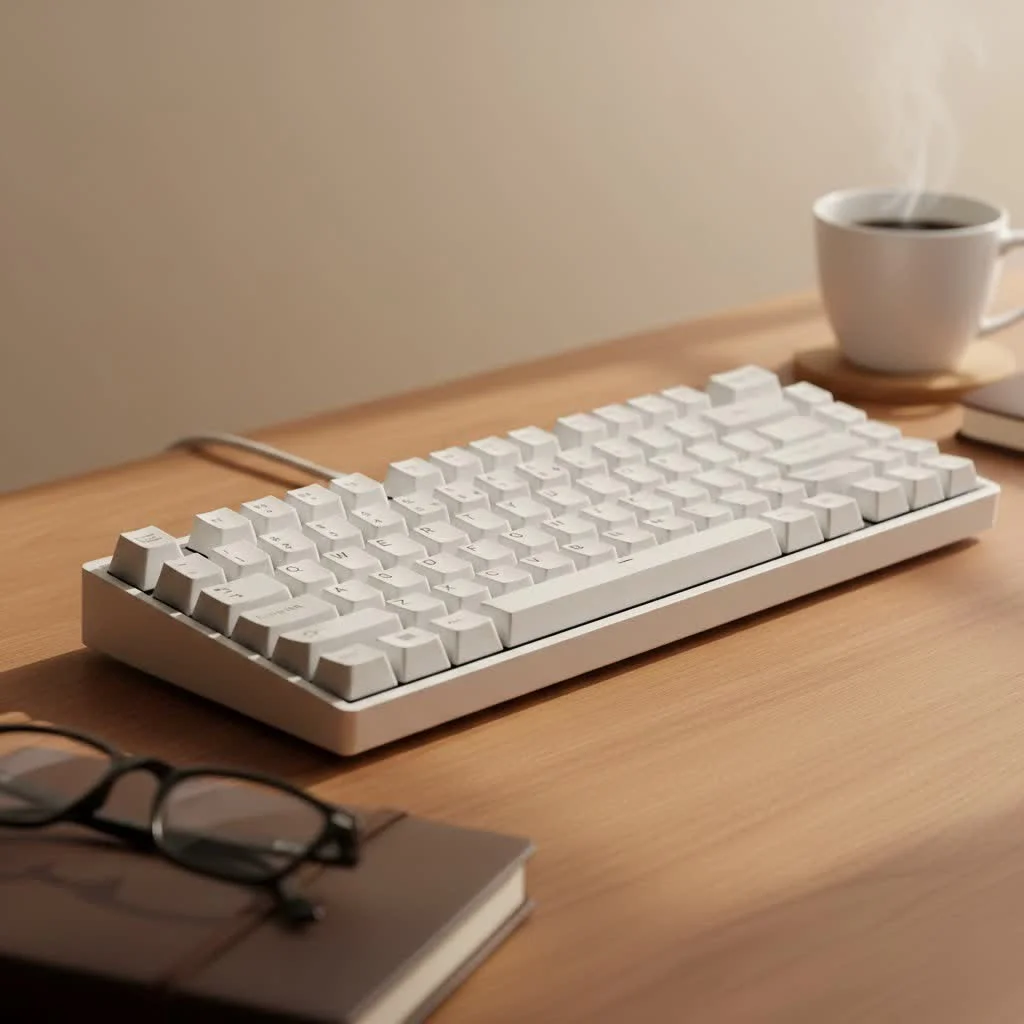
A hot swappable mechanical keyboard allows users to change its switches without soldering, offering unparalleled customization and ease of repair. This innovation removes the primary barrier for newcomers to the mechanical keyboard hobby, enabling a complete change in typing feel and sound within minutes using only simple tools. As a decade-long keyboard enthusiast and lead content creator for Yoasy.com, I’m here to guide you through everything necessary to begin this exciting journey.
What Exactly is a Hot Swappable Mechanical Keyboard?
In the simplest terms, a hot swappable mechanical keyboard allows you to change its switches without any soldering. Think of it like changing a lightbulb: you don’t need to rewire the lamp; you just unscrew the old bulb and screw in a new one. For complete reviews library on this site.
On a traditional mechanical keyboard, each switch is physically soldered onto the Printed Circuit Board (PCB)—the electronic backbone of the keyboard. This creates a permanent, durable connection. To change those switches, you need to desolder each one and then solder new ones in their place, a time-consuming process requiring specific tools and skills.
A hot swappable keyboard, however, features special sockets on its PCB. These sockets are designed to firmly grip the metal pins of a switch, creating the necessary electrical connection without a permanent bond. This means you can simply pull out the old switches and push new ones in. This innovation has revolutionized the keyboard community, making customization accessible to everyone.
The Core Benefits: Why Go Hot Swappable?
The appeal of a hot swappable board goes far beyond just a convenient feature; it fundamentally changes how you interact with and think about your keyboard.
Endless Experimentation
The primary reason enthusiasts love hot-swap boards is the freedom to experiment. The world of mechanical switches is vast and incredibly diverse, with three main families:
- Linear: Smooth, consistent keystrokes from top to bottom, favored by gamers for their speed and predictability.
- Tactile: A noticeable “bump” you can feel in the middle of the keystroke, providing feedback that you’ve activated the key. Great for typing.
- Clicky: A similar bump to tactiles, but with an added audible “click” sound. Incredibly satisfying, but perhaps not ideal for an open office!
With a hot-swappable keyboard, you aren’t locked into one choice. You can buy a small batch of different switches, test them out, and discover what truly fits your preference without committing to a full, soldered board. You can even mix and match switches on the same board—perhaps linear switches for your WASD keys and tactile for the rest.
Effortless Repairs and Upgrades
|
Our Picks for the Best Mechanical Keyboard in 2026
As an Amazon Associate I earn from qualifying purchases.
|
||
| Num | Product | Action |
|---|---|---|
| 1 | Redragon Mechanical Gaming Keyboard Wired, 11 Programmable Backlit Modes, Hot-Swappable Red Switch, Anti-Ghosting, Double-Shot PBT Keycaps, Light Up Keyboard for PC Mac |

|
| 2 | RK ROYAL KLUDGE R98 Pro Wired Mechanical Keyboard, 96% Creamy Gaming Keyboard RGB Backlit with Number Pad and Volume Knob, Gasket Mount, MDA Profile PBT Keycaps, Hot Swappable Pre-lubed Linear Switch |
|
| 3 | AK96 Smart Mechanical Keyboard Gaming, 96 Keys Full Size with LED Colorful Backlit, Clicky Creamy Sounding, USB Wired Computer Keyboard with Volume Knob for PC, Mac, Windows(Grey) |
|
| 4 | EPOMAKER x Aula F75 Gasket Mechanical Keyboard, 75% Wireless Hot Swappable Gaming Keyboard with Five-Layer Padding&Knob, Bluetooth/2.4GHz/USB-C, RGB (Light Blue, LEOBOG Reaper Switch) |
|
| 5 | Womier S-K80 75% Keyboard with Color Multimedia Display Mechanical Gaming Keyboard Creamy Sound, Wired Hot Swappable Gasket Mount RGB Custom Key board, Pre-lubed Stabilizer for Mac/Win, Black Kanagawa |
|
| 6 | AULA F99 Wireless Mechanical Keyboard,Tri-Mode BT5.0/2.4GHz/USB-C Hot Swappable Custom Keyboard,Pre-lubed Linear Switches,RGB Backlit Computer Gaming Keyboards for PC/Tablet/PS/Xbox |
|
| 7 | RK ROYAL KLUDGE S98 Mechanical Keyboard w/Smart Display & Knob, Top Mount 96% Wireless Mechanical Keyboard BT/2.4G/USB-C, Hot Swappable, Software Support, Creamy Sounding, 98 Keys |
|
| 8 | AULA F75 Pro Wireless Mechanical Keyboard,75% Hot Swappable Custom Keyboard with Knob,RGB Backlit,Pre-lubed Reaper Switches,Side Printed PBT Keycaps,2.4GHz/USB-C/BT5.0 Mechanical Gaming Keyboards |
|
| 9 | SteelSeries USB Apex 5 Hybrid Mechanical Gaming Keyboard – Per-Key RGB Illumination – Aircraft Grade Aluminum Alloy Frame – OLED Smart Display (Hybrid Blue Switch) |
|
| 10 | Logitech MX Mechanical Wireless Illuminated Performance Keyboard, Tactile Quiet Switches, Backlit Keys, Bluetooth, USB-C, macOS, Windows, Linux, iOS, Android, Metal, Graphite |
|
Even the best switches can fail over time. A key might start chattering (registering multiple presses) or stop working altogether. On a soldered board, this is a major headache. On a hot-swap board, it’s a 30-second fix: you just pop the faulty switch out and press a new one in. This extends the life of your keyboard indefinitely and saves you from having to buy a whole new device over one failed component.
The Perfect Entry Point
For years, the custom keyboard hobby had a steep learning curve. Hot-swappable keyboards have flattened that curve dramatically. They are the ideal starting point for anyone curious about building or modding their own keyboard. You get to experience the fun of customization and learn about how different switches impact sound and feel, all without the risk and investment associated with soldering equipment.
Getting Started: What You Need to Know Before Buying
Before you jump in, there are a couple of crucial compatibility details to understand. Getting these right will ensure a smooth and frustration-free experience.
3-Pin vs. 5-Pin Switches: A Crucial Detail
Mechanical switches in the popular “MX-style” (the standard established by Cherry) come in two main configurations: 3-pin and 5-pin.
- 3-Pin Switches: Have two metal pins (for the electrical connection) and a large central plastic post.
- 5-Pin Switches: Have the same two metal pins and central post, plus two additional small plastic “guiding” legs for extra stability. These are often called “PCB-mount” switches.
Here’s the key takeaway:
- A 5-pin hot-swap socket can accept both 3-pin and 5-pin switches. The extra holes on the PCB accommodate the guiding legs.
- A 3-pin hot-swap socket can only accept 3-pin switches.
Expert Tip: Don’t despair if you have 5-pin switches and a 3-pin board! You can easily make them compatible by carefully snipping off the two small plastic guiding legs with a pair of flush cutters or nail clippers. The switch will function perfectly.
The Right Tools for the Job
You don’t need a massive toolbox for this. All you really need are two inexpensive tools that often come included with the keyboard itself:
- Keycap Puller: Used to safely remove the keycaps without damaging them or the switch underneath. A wire-style puller is generally preferred over the plastic ring-style, as it’s less likely to scratch your keycaps.
- Switch Puller: This tool is designed to grip the small tabs on the top and bottom of a switch, allowing you to pull it straight out of the socket.
How to Swap Your Switches: A Simple 4-Step Guide
Ready to perform your first swap? It’s incredibly simple. Just be patient and gentle.
- Disconnect Your Keyboard: First and foremost, unplug your keyboard from the computer. While the risk is low, it’s always best practice to work on electronics when they are unpowered.
- Remove the Keycap: Place your keycap puller over the keycap you want to remove. Wiggle it slightly and pull straight up. The keycap should pop right off.
- Remove the Switch: Take your switch puller and position its prongs to catch the small plastic tabs on the north and south sides of the switch housing. Squeeze the puller to secure your grip and pull straight up with a gentle, consistent force. You may need to wiggle it a tiny bit to loosen it from the socket.
- Install the New Switch: Take your new switch and carefully inspect the two metal pins on the bottom. They must be perfectly straight. If they are bent, gently straighten them with your fingers or a pair of tweezers. Align the pins with the holes in the hot-swap socket on the PCB and press the switch down firmly and evenly. You should feel it click securely into place.
After installing the new switch, it’s a good idea to plug the keyboard in and test the key before putting the keycap back on. This ensures the switch is seated correctly and working properly.
Frequently Asked Questions (FAQ)
What’s the main difference between hot-swappable and soldered keyboards?
The difference lies in the PCB. Hot-swappable keyboards use sockets that allow switches to be plugged in and removed without tools, while soldered keyboards have switches permanently attached with molten metal, requiring desoldering and soldering to replace.
Is it safe to swap switches? Can I damage my keyboard?
It is very safe as long as you are gentle. The most common mistake is trying to insert a switch with bent pins, which can damage the hot-swap socket. Always inspect the pins to ensure they are perfectly straight before pushing the switch into the PCB.
Do I need to turn my keyboard off before swapping switches?
Yes, it’s always the safest practice to unplug your keyboard before changing any components. This prevents any chance of an accidental short circuit.
How durable are hot-swap sockets?
The durability of hot-swap sockets, often rated for thousands of swaps, depends on their quality. Reputable brands like Kailh or Gateron make reliable sockets. As long as you insert switches carefully and avoid bending the pins, they should last for the entire lifespan of the keyboard.
Do all switches fit in all hot-swappable keyboards?
No. Most hot-swappable keyboards use sockets designed for MX-style switches. They are not compatible with other types, like Optical or Hall-Effect switches. You must be mindful of the 3-pin versus 5-pin compatibility.
Your Custom Keyboard Awaits
The hot swappable mechanical keyboard isn’t just a product; it’s a platform for creativity. It invites you to explore, tinker, and fine-tune your most-used tool to perfectly match your preferences. The ability to change switches on a whim transforms your keyboard from a static device into an evolving project that reflects your personal style and needs. So go ahead, pick up a switch tester, find a sound profile you love, and start building the keyboard that is uniquely yours. Your fingers will thank you.
Frequently Asked Questions
What is the main difference between hot-swappable and soldered keyboards?
The main difference lies in the PCB design. Hot-swappable keyboards feature special sockets that allow switches to be easily plugged in and removed without soldering, whereas soldered keyboards have switches permanently attached, requiring desoldering and resoldering for replacement.
Is it safe to swap switches, and can I damage my mechanical keyboard?
Swapping switches is very safe if done gently. The most common error is attempting to insert a switch with bent pins, which can damage the hot-swap socket. Always inspect the two metal pins on the switch to ensure they are perfectly straight before insertion.
Do I need to power off my keyboard before changing switches?
Yes, it is always the safest practice to unplug your keyboard from the computer before changing any components. This precaution prevents any potential accidental short circuits and protects the electronics during the swap process.
How durable are hot-swap sockets in mechanical keyboards?
The durability of hot-swap sockets, such as those from Kailh or Gateron, is generally high, often rated for thousands of swaps. With careful insertion of switches and avoiding bent pins, these sockets are designed to last for the entire lifespan of the keyboard.
Are all mechanical switches compatible with every hot-swappable keyboard?
No, not all switches fit all hot-swappable keyboards. Most hot-swappable keyboards are designed for MX-style switches and are not compatible with other types like Optical or Hall-Effect switches. Additionally, users must consider 3-pin versus 5-pin switch compatibility with their keyboard's sockets.
How to Swap Mechanical Keyboard Switches
This guide outlines the simple, four-step process for safely swapping switches on a hot-swappable mechanical keyboard, enhancing customization and repair.
Before starting, always unplug your keyboard from the computer. This ensures safety and prevents any electrical issues while handling components.
Use a keycap puller to gently remove the keycap from the switch you wish to replace. Wiggle it slightly and pull straight up until the keycap detaches.
Position your switch puller to grip the small plastic tabs on the north and south sides of the switch housing. Squeeze the puller to secure your grip and pull straight up with gentle, consistent force to release the switch from its socket.
Inspect the two metal pins on the new switch to ensure they are perfectly straight; straighten any bent pins with tweezers. Align the pins with the holes in the hot-swap socket on the PCB and press the switch down firmly and evenly until it clicks securely into place.
Get our weekly buyer guide
Practical specs, not advice. Unsubscribe anytime.
This was super helpful! I was looking for a way to customize my typing experience without committing to one type of switch, and the explanation of how hot swappable PCBs work made it clear. I’m now confidently looking at different switch types to find my perfect match. No more fear of messing up a solder job!
Great info here! I’ve had a hot swappable board for a while, but I never really understood the full benefits until reading this. The comparison to changing a lightbulb really clicked for me. I’ve been experimenting with some tactile switches after using linear for so long, and it’s awesome to be able to do it in minutes.
While the ease of changing switches is a huge plus, I found that some of the cheaper hot-swap sockets can feel a bit loose after a lot of changes. It’s not a dealbreaker, but something to be aware of if you’re constantly swapping. Still, for someone who wants to try different switches without soldering, it’s a solid option.
I’ve been wanting to get into mechanical keyboards for ages but the whole soldering thing always put me off. This guide really helped me understand how easy it is to just swap out switches. I ended up getting a GMMK Pro and it’s been a game changer for trying different feels without any hassle. Definitely recommend for anyone new to the hobby!