Welcome to the Yoasy.com workshop! As a mechanical engineer who has spent the better part of a decade tinkering, building, and obsessing over mechanical keyboards, I’ve seen trends come and go. But one movement has firmly planted its flag on desks worldwide: the rise of the Mini Mechanical Keyboard. These compact powerhouses are more than just a novelty; they represent a significant shift in how we approach our typing experience, blending performance, aesthetics, and ergonomics into a small, satisfying package. If you’re tired of that oversized plastic board cluttering your desk, you’ve come to the right place. Let’s dive into the world of compact keyboards and find out if going small is the right move for you.
What Exactly Is a Mini Mechanical Keyboard?
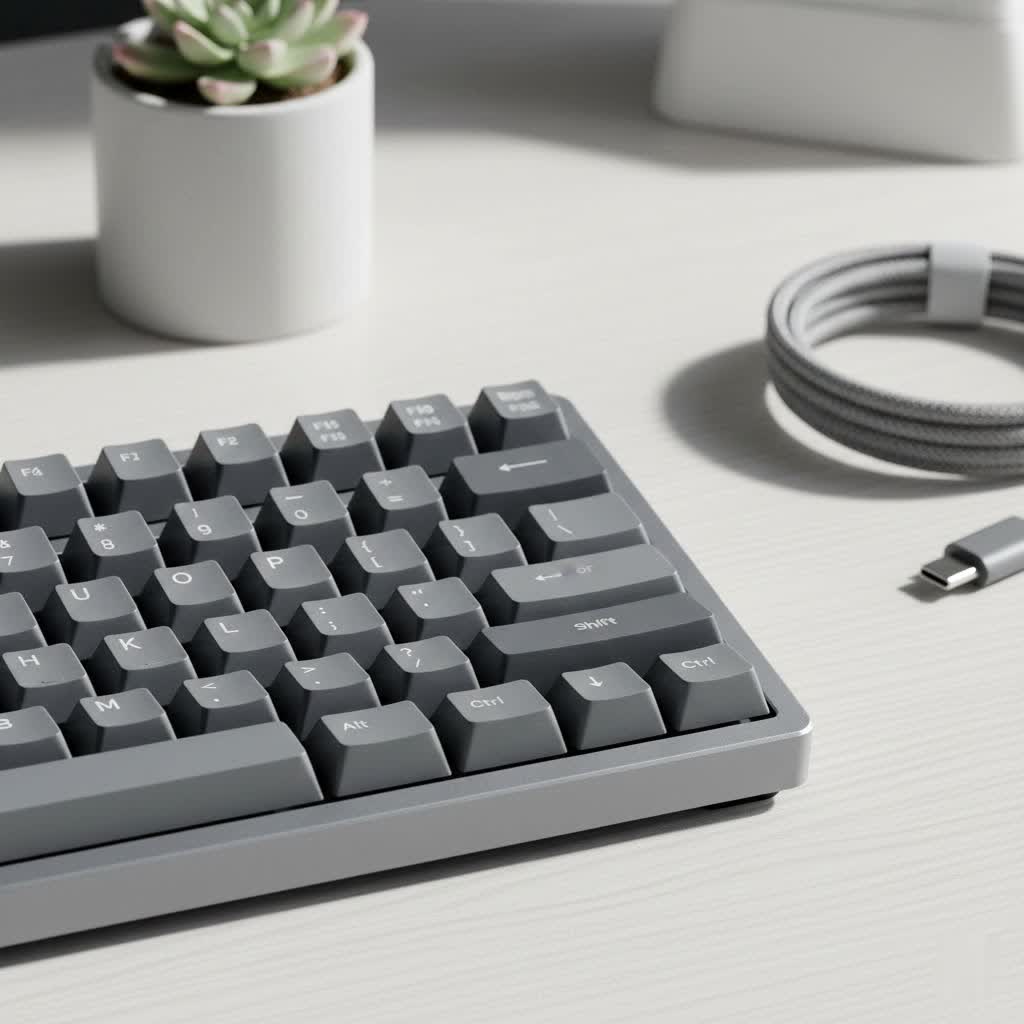
A mini mechanical keyboard is any keyboard smaller than the traditional “tenkeyless” (TKL) layout. While a full-size board has a number pad and a TKL chops it off, mini keyboards take space-saving a step further. They achieve their small footprint by strategically removing keys like the function row (F1-F12), the navigation cluster (Home, End, Page Up/Down), and sometimes even the dedicated arrow keys.
Don’t let the small size fool you. The “missing” keys aren’t gone forever; they are simply moved to a secondary layer, accessible by holding down a function (Fn) key. This layered approach is the secret sauce of mini keyboards, allowing for a highly efficient and customized workflow once you get the hang of it. It’s about working smarter, not harder, with a tool that’s tailored perfectly to your hands.
Decoding the Layouts: 40%, 60%, and 65% Explained
The term “mini mechanical keyboard” covers a few popular layouts. Understanding the differences is crucial to picking the right one for your needs.
The Ultra-Compact: 40% Keyboards
|
Our Picks for the Best Mechanical Keyboard in 2026
As an Amazon Associate I earn from qualifying purchases.
|
||
| Num | Product | Action |
|---|---|---|
| 1 | RK ROYAL KLUDGE R98 Pro Wired Mechanical Keyboard, 96% Creamy Gaming Keyboard RGB Backlit with Number Pad and Volume Knob, Gasket Mount, MDA Profile PBT Keycaps, Hot Swappable Pre-lubed Linear Switch |

|
| 2 | Logitech MX Mechanical Wireless Illuminated Performance Keyboard, Tactile Quiet Switches, Backlit Keys, Bluetooth, USB-C, macOS, Windows, Linux, iOS, Android, Metal, Graphite |
|
| 3 | AK96 Smart Mechanical Keyboard Gaming, 96 Keys Full Size with LED Colorful Backlit, Clicky Creamy Sounding, USB Wired Computer Keyboard with Volume Knob for PC, Mac, Windows(Grey) |
|
| 4 | Redragon Mechanical Gaming Keyboard Wired, 11 Programmable Backlit Modes, Hot-Swappable Red Switch, Anti-Ghosting, Double-Shot PBT Keycaps, Light Up Keyboard for PC Mac |
|
| 5 | RK ROYAL KLUDGE S98 Mechanical Keyboard w/Smart Display & Knob, Top Mount 96% Wireless Mechanical Keyboard BT/2.4G/USB-C, Hot Swappable, Software Support, Creamy Sounding, 98 Keys |
|
| 6 | AULA F75 Pro Wireless Mechanical Keyboard,75% Hot Swappable Custom Keyboard with Knob,RGB Backlit,Pre-lubed Reaper Switches,Side Printed PBT Keycaps,2.4GHz/USB-C/BT5.0 Mechanical Gaming Keyboards |
|
| 7 | EPOMAKER x Aula F75 Gasket Mechanical Keyboard, 75% Wireless Hot Swappable Gaming Keyboard with Five-Layer Padding&Knob, Bluetooth/2.4GHz/USB-C, RGB (Light Blue, LEOBOG Reaper Switch) |
|
| 8 | AULA F99 Wireless Mechanical Keyboard,Tri-Mode BT5.0/2.4GHz/USB-C Hot Swappable Custom Keyboard,Pre-lubed Linear Switches,RGB Backlit Computer Gaming Keyboards for PC/Tablet/PS/Xbox |
|
| 9 | Womier S-K80 75% Keyboard with Color Multimedia Display Mechanical Gaming Keyboard Creamy Sound, Wired Hot Swappable Gasket Mount RGB Custom Key board, Pre-lubed Stabilizer for Mac/Win, Black Kanagawa |
|
| 10 | SteelSeries USB Apex 5 Hybrid Mechanical Gaming Keyboard – Per-Key RGB Illumination – Aircraft Grade Aluminum Alloy Frame – OLED Smart Display (Hybrid Blue Switch) |
|
This is the most minimalist layout you’ll find. A 40% keyboard strips things down to the bare essentials: just the alphabet keys, modifiers (Shift, Control, etc.), and a few punctuation keys. Even the number row is relegated to a function layer. This layout is a favorite among hardcore enthusiasts who crave ultimate portability and are willing to invest time in mastering its layers. It has a steep learning curve but offers a uniquely efficient typing experience once mastered.
The Sweet Spot: 60% Keyboards
The 60% layout is arguably the most popular entry point into the world of mini keyboards. It removes the function row, navigation cluster, and number pad but keeps the dedicated number row intact. This makes it much easier to adapt to than a 40% board. Its compact, symmetrical look is a huge draw for those aiming for a clean, minimalist desk setup. The main challenge for newcomers is living without dedicated arrow keys, which are typically accessed on a function layer.
Functionality Meets Form: 65% Keyboards
For many users, the 65% layout is the perfect compromise. It’s only slightly wider than a 60% board but cleverly squeezes in dedicated arrow keys and a few essential navigation keys like Delete or Page Up/Down. This small addition makes a world of difference for productivity, especially for writers and coders who can’t live without their arrows. You get most of the space-saving benefits of a 60% board with the added convenience of crucial keys.
Why Choose a Mini Mechanical Keyboard? The Big Advantages
You might be wondering why anyone would willingly give up keys. The benefits are surprisingly significant and go far beyond just aesthetics.
- Superior Ergonomics: A smaller keyboard allows you to keep your mouse closer to your body’s centerline. This reduces shoulder strain and promotes a more natural, comfortable posture during long sessions of work or gaming.
- More Desk Space: This one is obvious but can’t be overstated. A mini keyboard frees up a massive amount of real estate on your desk, giving you more room for your mouse, notebooks, or just a cleaner, more focused workspace.
- Portability: Mini keyboards are perfect for life on the go. Tossing one in your backpack to use with a laptop or tablet is effortless, ensuring you have a top-tier typing experience wherever you are.
- Deep Customization: The mini keyboard community is at the heart of the custom keyboard hobby. From swapping keycaps and switches to reprogramming layouts with firmware like QMK/VIA, a mini keyboard is a blank canvas for you to create your perfect tool.
Key Considerations Before Buying Your First Mini Keyboard
Ready to make the leap? Here’s what you need to think about before you buy.
The Heart of the Board: Switches
The mechanical switches beneath each key define how your keyboard feels and sounds. There are three main types:
- Linear: Smooth and consistent with no bump or click. Favored by gamers for their speed and quiet operation. (e.g., Cherry MX Red, Gateron Yellow)
- Tactile: Provides a small, noticeable “bump” when the key is pressed, confirming actuation without a loud click. A great all-around choice for typing and gaming. (e.g., Cherry MX Brown, Boba U4T)
- Clicky: Features both a tactile bump and an audible click. Extremely satisfying for typists who love feedback, but maybe not the best for a quiet office. (e.g., Cherry MX Blue, Kailh Box White)
The Look and Feel: Keycaps
Keycaps are the plastic tops you press. They come in various materials, like durable PBT or common ABS plastic, and different profiles (shapes), which affect the feel of typing. This is one of the easiest ways to personalize your board’s look and feel.
Build Quality and Materials
Cases for mini keyboards can range from plastic to premium aluminum. A heavier, well-built case will feel more stable and can significantly improve the sound profile of your keyboard.
Wired vs. Wireless
Many modern mini keyboards offer robust Bluetooth and 2.4GHz wireless options, perfect for a clean, cable-free setup. However, for competitive gaming, a wired connection still provides the most reliable, latency-free input.
Is It Programmable?
One of the biggest features of enthusiast keyboards is programmability. Boards that support firmware like QMK or VIA allow you to remap any key, create complex macros, and customize function layers to perfectly match your workflow. This turns your keyboard from a simple input device into a highly personalized productivity tool.
“The beauty of a programmable 60% keyboard is that you’re not losing keys, you’re just putting them where you want them,” says Alex “Keeb” Chen, a veteran keyboard modder. “My arrow keys are on IJKL on a layer—my fingers never have to leave the home row.”
Frequently Asked Questions (FAQ)
Q: Are mini mechanical keyboards good for gaming?
A: Absolutely. Many professional gamers prefer mini keyboards because the smaller size provides more desk space for wide mouse movements, which is essential in FPS games. The programmability also allows for custom gaming layouts and macros.
Q: How long does it take to get used to a smaller layout?
A: The adjustment period varies. For a 65% layout with arrow keys, it might only take a day or two. For a 60% or 40% layout that relies heavily on function layers, expect a week or two of consistent use to build muscle memory and become truly proficient.
Q: What is a “hot-swappable” keyboard?
A: A hot-swappable keyboard has a PCB (Printed Circuit Board) that allows you to pull out and replace the mechanical switches without any soldering. This is a fantastic feature for beginners who want to experiment with different switch types to find their favorite feel.
Q: Will I miss the number pad?
A: It depends on your work. If you do a lot of data entry or work with spreadsheets, you will likely miss the dedicated number pad. However, you can always buy a separate mechanical number pad to use when needed, giving you the best of both worlds.
Q: Where is the best place to buy a mini mechanical keyboard?
A: There are many great options. For pre-built keyboards, brands like Keychron, Ducky, and Anne Pro are excellent starting points. For custom builds and parts, vendors like KBDFans and Glorious serve the enthusiast community well.
Your Desk, Reimagined
Switching to a mini mechanical keyboard is more than just an upgrade; it’s a deliberate choice to refine your workspace and interact with your computer more efficiently. It’s about embracing a philosophy of minimalism without sacrificing performance. Whether you’re a writer, a coder, a gamer, or simply someone who appreciates well-crafted tools, there’s a mini keyboard out there that can transform your daily grind into a satisfying experience. Take the plunge, free up your desk, and discover just how powerful small can be.
