As an engineer who has spent the last decade immersed in the world of mechanical keyboards, I’ve seen countless trends come and go. But the rise of the Split Mechanical Keyboard isn’t just a trend; it’s a fundamental shift in how we approach typing comfort, efficiency, and health. Here at Yoasy, we believe in empowering users with knowledge, and today, we’re dissecting the split keyboard to show you why it might be the most significant upgrade you ever make for your desk setup.
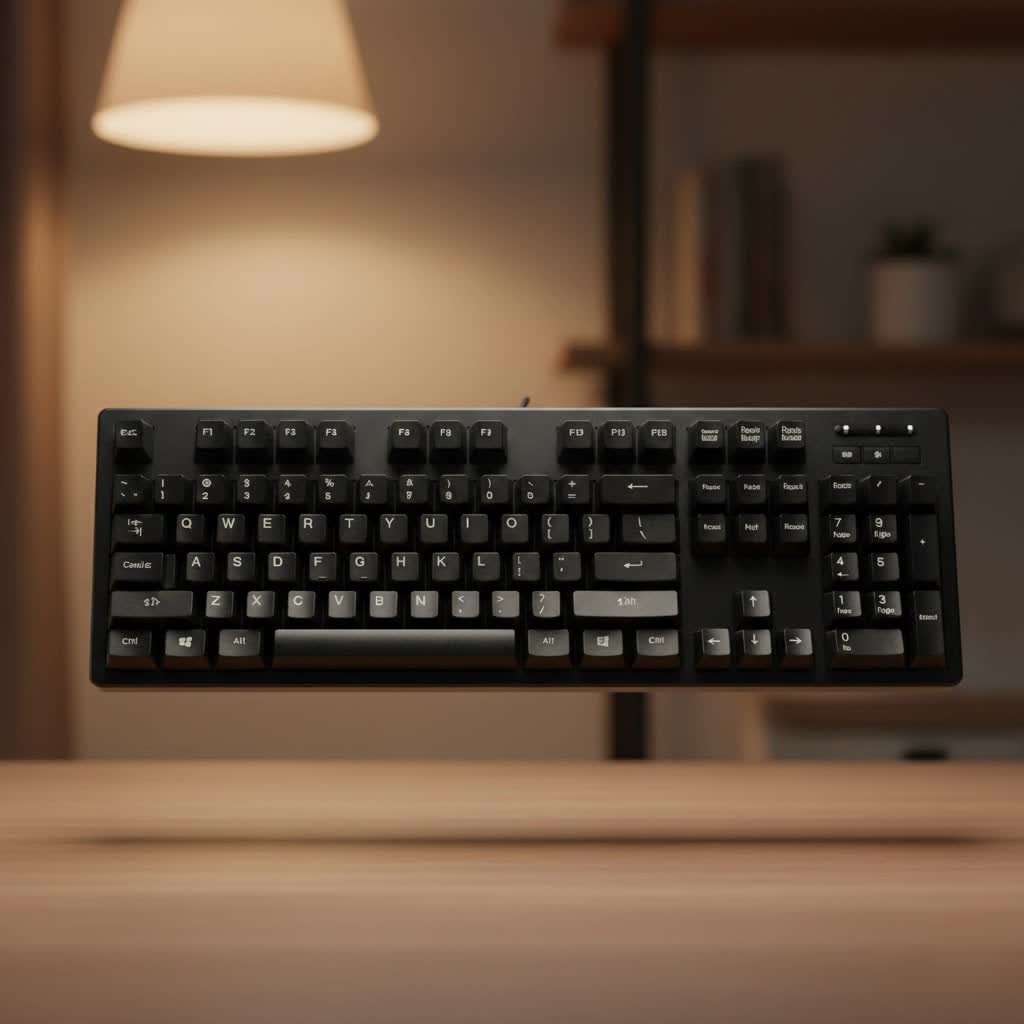
A split mechanical keyboard is exactly what it sounds like: a keyboard that is physically separated into two independent halves. This design allows you to position each half on your desk at a distance and angle that perfectly matches your body’s natural posture. Instead of forcing your hands together in front of you, a split layout lets your wrists and arms align straight with your shoulders, revolutionizing the ergonomics of typing.
The Ergonomic Advantage: Why Go Split?
The primary reason people switch to a split mechanical keyboard is for the profound ergonomic benefits. Traditional keyboards force your wrists into an unnatural inward angle known as ulnar deviation and often cause you to hunch your shoulders. A split keyboard directly addresses these issues, promoting a healthier and more comfortable typing experience.
Aligning Your Wrists and Shoulders
|
Our Picks for the Best Mechanical Keyboard in 2026
As an Amazon Associate I earn from qualifying purchases.
|
||
| Num | Product | Action |
|---|---|---|
| 1 | AK96 Smart Mechanical Keyboard Gaming, 96 Keys Full Size with LED Colorful Backlit, Clicky Creamy Sounding, USB Wired Computer Keyboard with Volume Knob for PC, Mac, Windows(Grey) |

|
| 2 | AULA F75 Pro Wireless Mechanical Keyboard,75% Hot Swappable Custom Keyboard with Knob,RGB Backlit,Pre-lubed Reaper Switches,Side Printed PBT Keycaps,2.4GHz/USB-C/BT5.0 Mechanical Gaming Keyboards |
|
| 3 | AULA F99 Wireless Mechanical Keyboard,Tri-Mode BT5.0/2.4GHz/USB-C Hot Swappable Custom Keyboard,Pre-lubed Linear Switches,RGB Backlit Computer Gaming Keyboards for PC/Tablet/PS/Xbox |
|
| 4 | SteelSeries USB Apex 5 Hybrid Mechanical Gaming Keyboard – Per-Key RGB Illumination – Aircraft Grade Aluminum Alloy Frame – OLED Smart Display (Hybrid Blue Switch) |
|
| 5 | EPOMAKER x Aula F75 Gasket Mechanical Keyboard, 75% Wireless Hot Swappable Gaming Keyboard with Five-Layer Padding&Knob, Bluetooth/2.4GHz/USB-C, RGB (Light Blue, LEOBOG Reaper Switch) |
|
| 6 | RK ROYAL KLUDGE S98 Mechanical Keyboard w/Smart Display & Knob, Top Mount 96% Wireless Mechanical Keyboard BT/2.4G/USB-C, Hot Swappable, Software Support, Creamy Sounding, 98 Keys |
|
| 7 | RK ROYAL KLUDGE R98 Pro Wired Mechanical Keyboard, 96% Creamy Gaming Keyboard RGB Backlit with Number Pad and Volume Knob, Gasket Mount, MDA Profile PBT Keycaps, Hot Swappable Pre-lubed Linear Switch |
|
| 8 | Redragon Mechanical Gaming Keyboard Wired, 11 Programmable Backlit Modes, Hot-Swappable Red Switch, Anti-Ghosting, Double-Shot PBT Keycaps, Light Up Keyboard for PC Mac |
|
| 9 | Womier S-K80 75% Keyboard with Color Multimedia Display Mechanical Gaming Keyboard Creamy Sound, Wired Hot Swappable Gasket Mount RGB Custom Key board, Pre-lubed Stabilizer for Mac/Win, Black Kanagawa |
|
| 10 | Logitech MX Mechanical Wireless Illuminated Performance Keyboard, Tactile Quiet Switches, Backlit Keys, Bluetooth, USB-C, macOS, Windows, Linux, iOS, Android, Metal, Graphite |
|
By separating the two halves, you can place them at shoulder width. This simple adjustment has a cascade of positive effects. Your shoulders can relax, your chest opens up, and your posture naturally improves. Most importantly, it allows your wrists to remain straight, significantly reducing the strain that can lead to repetitive strain injuries (RSI) like carpal tunnel syndrome. Studies have shown that an adjustable split layout can reduce ulnar deviation by a significant margin without impacting typing speed after an adjustment period.
The Power of Tenting
Many split keyboards also offer a feature called “tenting.” This allows you to raise the inner edges of each keyboard half, creating a tent-like angle. Tenting lets your hands rest in a more neutral, “handshake” position, which reduces forearm pronation—the twisting of your forearm muscles required to keep your palms flat on a traditional keyboard. Even a small degree of tenting can make a world of difference in comfort over long typing sessions.
“The transition to a split, tented keyboard is often a revelation for people who type all day. It’s not about luxury; it’s about sustainability. You’re removing known physiological stressors and allowing your body to work in a state of alignment, not opposition,” says ergonomic consultant Dr. Alistair Finch.
Beyond Ergonomics: Flexibility and Customization
While comfort is king, the benefits of a split mechanical keyboard don’t stop there. The design unlocks a new level of flexibility and personalization that standard keyboards can’t match.
- Optimized Desk Space: Splitting the keyboard creates valuable real estate in the middle of your desk. This is the perfect spot for a trackball mouse, a drawing tablet, a notepad, or even your morning coffee, keeping essential tools within easy reach.
- Gaming Advantage: Gamers can benefit by using just the left half for gameplay, providing more room for wide mouse movements. The programmability of these keyboards also allows for complex macros and custom layouts tailored to specific games.
- Deep Customization: The custom mechanical keyboard community has fully embraced the split design. This means you have endless options, from DIY kits where you solder every component to hot-swappable boards that let you change switches in minutes. You can program every key, create custom layers for different applications, and truly make the keyboard your own.
What to Consider Before Making the Switch
A split mechanical keyboard is a significant investment in both cost and time. Before you dive in, it’s important to understand the challenges you might face.
The Inevitable Learning Curve
There’s no sugarcoating it: adjusting to a split keyboard takes time. Your muscle memory has been trained on a standard layout for years. Separating the halves will initially feel strange, and you’ll find yourself reaching for keys with the wrong hand. If the keyboard also features an ortholinear layout (where keys are in a straight grid instead of staggered), the learning curve will be steeper. Be prepared for a temporary drop in typing speed and accuracy. However, most users find they return to their original speed—and often exceed it—within a few weeks, all while enjoying greater comfort.
Choosing Your First Split Keyboard
The market for split keyboards has exploded, offering options for every type of user. Here’s a quick breakdown to help you navigate your choices:
- Pre-built Keyboards: Companies like ZSA Technology Labs (Moonlander, ErgoDox EZ), Kinesis (Advantage360), and Dygma (Raise, Defy) offer polished, feature-rich split keyboards that are ready to use out of the box. These are great options if you want a premium experience without the hassle of building.
- DIY Kits: For the enthusiasts who love to tinker, DIY kits from vendors like Keebio or Boardsource are a fantastic choice. Building your own keyboard is a rewarding experience that gives you ultimate control over every component, from the switches and keycaps to the case material.
- Layout and Size: Split keyboards come in various sizes, from full-size layouts to compact 40% or 60% boards that eliminate number rows and function keys in favor of programmable layers. Smaller layouts reduce finger travel but increase the learning curve.
Frequently Asked Questions (FAQ)
How long does it take to get used to a split keyboard?
The adjustment period varies, but most people feel reasonably comfortable within one to two weeks of consistent use. Reaching your previous typing speed and accuracy might take up to a month. The key is to be patient and stick with it.
Are split mechanical keyboards better for your health?
Yes, by promoting a more natural posture for your hands, wrists, and shoulders, they can significantly reduce the physical stress associated with long hours of typing. This helps prevent common issues like wrist pain, shoulder tension, and RSIs.
Can I game on a split keyboard?
Absolutely. Many gamers find the split design advantageous. You can move one half out of the way to create more space for your mouse, and the deep programmability allows for creating the perfect layout and macros for your favorite games.
Are split keyboards worth the high cost?
While they are more expensive than standard keyboards, the investment can be worthwhile for anyone who spends a significant amount of time typing. The long-term ergonomic benefits, increased comfort, and high degree of customization provide value that can justify the initial cost.
What is the difference between a split and an ergonomic keyboard?
All split keyboards are ergonomic, but not all ergonomic keyboards are split. Some ergonomic keyboards are single-piece designs with a fixed wave or curved shape, like the Microsoft Sculpt. A true split keyboard offers greater adjustability because the two halves are completely separate.
The Final Verdict
The split mechanical keyboard represents more than just a different way to type; it’s a commitment to your long-term health and comfort at the desk. It challenges years of ingrained muscle memory but rewards you with a typing experience that is tailored specifically to your body. Whether you’re a programmer writing code for eight hours a day, a writer crafting your next novel, or an enthusiast seeking the ultimate custom build, making the switch could be one of the best decisions you make for your workflow and your well-being.
